
Nukh Berzegov


FamilyTreeDNA Branch R-BY63726:
https://discover.familytreedna.com/y-dna/R-BY63726/classic
https://discover.familytreedna.com/groups/circassian/tree?subgroups=252846
His family symbol is shown above.
Nukh Berzegov (Circassian: Бэрзэдж Iэслъэнчэрий и къуэ Нухь) was head of Adyghea from 1960 to 1983. The Adyghea was an autonomous region within Krasnodar Krai, Soviet Union and existed from 1922 to 1991.
Born on November 30, 1925 in Bzhedughabl (Бжъэдыгъухьабл) in Adyghea into a family of the descendants of the Ubykh aristocratic house of Berzeg (Ubykh: Барзагь).
He was brave, smart, and noble person. He was called up to the Eastern Front of WWII as a 17-year-old boy, rose through the military ranks up to regiment, and was awarded two Orders of the Red Star, the Order of the Patriotic War, 1st сlass, and seven other medals, including «For Courage». He became a Ph.D. in Economics in 1969.
He made significant efforts to develop the economy of Adygea, the remnant of historical Circassia, as well as to preserve the Circassian (Adyghe) people as an ethnic group. The years of Nukh Berzegov’s leadership of the Adygea, which lasted almost a quarter of a century, were one of the most fruitful periods in the development of its economy. After his career as the first secretary of Adyghea, he was Consul General of the USSR in Varna, Bulgaria. He was an honorary citizen of the Bulgarian cities of Ruse and Shumen. Nukh Berzegov lived a long and bright life leaving behind a notable legacy. He passed away on March 17, 2002. His detailed Y-DNA haplogroup was determined by Big Y testing of the grandson of his brother.
Some links:
https://ru.wikipedia.org/wiki/%D0%91%D0%B5%D1%80%D0%B7%D0%B5%D0%B3%D0%BE%D0%B2,_%D0%9D%D1%83%D1%85_%D0%90%D1%81%D0%BB%D0%B0%D0%BD%D1%87%D0%B5%D1%80%D0%B8%D0%B5%D0%B2%D0%B8%D1%87
https://en.wikipedia.org/wiki/Adyghe_Autonomous_Oblast
https://en.wikipedia.org/wiki/Adyghe_Regional_Committee_of_the_Communist_Party_of_the_Soviet_Union
House of Inal

FamilyTreeDNA branch FT230654
Also, it’s possible that it’s FGC22480 too, an ancestor branch for FT230654.
https://discover.familytreedna.com/groups/circassian/tree?subgroups=252847
https://discover.familytreedna.com/y-dna/R-FT230654/classic
https://discover.familytreedna.com/y-dna/R-FGC22480/classic
House of Inal (Circassian: Инал Нэху) — was a dynastic lineage and noble families that claimed descent from Inal the Great, the legendary king of Circassia, revered for unifying the fragmented Circassian tribes into a consolidated state. Some historians date the time of his unification reforms to the 8th century, while others associate his activities with the 15th century. Inal is remembered not just as a king, but as a culture-bringer, lawgiver, and military genius. He is often mentioned in Circassian oral epics, genealogies, and historical chronicles as a founding patriarch.
Inal the Great was a pivotal figure in Circassian history and his legacy persists in the genealogies of noble families and the cultural memory of the Circassian people. He reportedly had many sons and grandsons, who became tribal princes and founders of several major Circassian tribes and noble houses. Those noble families in Kabarda were Misost (Circassian: Мысост), Atazhukin (Circassian: Хьэтохъущокъуэ), etc. Kabarda was the largest and easternmost tribal region of Circassia and Kabardians were known as politically and militarily the most powerful Circassian group. Ancient Kabardian legends convey to us the history of the foundation of Kabarda as a political entity, which began with a representative of the House of Tambiev. In the Middle Ages they ceded power to a new Inalid dynasty, who ruled Kabarda until its conquest by the Russian Empire in the 19th century.
The Cherkassky family that emerged from the Circassian nobility claims descent from Inal the Great, aligning themselves with his legacy of leadership and unification. Their ascent in Russian society began with strategic alliances and military service such as forged alliance with Tsar Ivan IV (Ivan the Terrible).
«Inalid Lineage» is sometimes used informally to describe families that trace noble descent back to his era thus not everyone who claims to be a descendant of him is one. The Y-DNA haplogroup was determined by Big Y testing of the representative of Misost family.
Some links:
https://en.wikipedia.org/wiki/Inal_the_Great
https://ru.wikipedia.org/wiki/%D0%98%D0%BD%D0%B0%D0%BB_(%D0%BA%D0%BD%D1%8F%D0%B7%D1%8C)
https://en.wikipedia.org/wiki/Temryuk_Idar
https://en.wikipedia.org/wiki/Kabardians
https://en.wikipedia.org/wiki/Cherkassky
https://commons.wikimedia.org/wiki/File:The_supreme_princes_of_the_Circassian_princedom_of_Kabarda.jpg
https://abkhazworld.com/aw/history/1724-the-legendary-circassian-prince-inal-by-vitaliy-shtybin

House of Tamby

FamilyTreeDNA branch R-FTB27706 / R-FT425089
Also possible to be up to FT343210 or even FT200426, it’s old dynasty.
https://discover.familytreedna.com/groups/circassian/tree?subgroups=253888,257764,257765,281917,288017,325737,325738,364826
https://discover.familytreedna.com/y-dna/R-FT425089/classic
https://discover.familytreedna.com/y-dna/R-FT343210/classic
https://discover.familytreedna.com/y-dna/R-BY60213/classic
House of Tamby (Circassian: Тамбий) — one of the oldest and distinguished noble families of Kabarda. Circassia was a historical homeland of the Circassian (Adyghe) people in the Northwestern Caucasus and Kabarda was its largest and easternmost tribal region. Kabardians were known as politically and militarily the most powerful Circassian group.
Ancient Kabardian legends convey to us the history of the foundation of Kabarda as a political entity, which began with a representative of the House of Tambiev. In the Middle Ages they ceded power to a new Inalid dynasty, who ruled Kabarda until its conquest by the Russian Empire in the 19th century.
In traditional Kabardian society, the nobility, «pshi» (Circassian: пщы) and «warq» (Circassian: уэркъ), held significant influence, often owning vast lands and commanding military forces. Noble families were integral to the social and political structures, with their status often tied to their lineage and contributions to the community. While «pshi» was known as class of princes, the association of Tambiev family’s with the «warq» class, in particular «tlekotlesh» (Circassian: лъакъуэлъэщ) following them, underscores their historical importance in Kabarda.
Eventhough specific historical records about the family’s origins and activities are limited, their prominence is notably marked by the contributions of Pago Tambiev (c. 1873–1928), a pioneering Circassian folklorist and educator who played a crucial role in preserving and documenting the oral traditions of the Circassian (Adyghe) people. The Y-DNA haplogroup was determined by Big Y testing of several representatives of Tamby family including grandson of Pago Tambiev’s brother.
Some links
https://en.wikipedia.org/wiki/Kabardia
https://ru.wikipedia.org/wiki/Кабарда
https://en.wikipedia.org/wiki/Circassians
https://ru.wikipedia.org/wiki/%D0%A2%D0%B0%D0%BC%D0%B1%D0%B8%D0%B5%D0%B2,_%D0%9F%D0%B0%D0%B3%D0%BE_%D0%98%D0%B7%D0%BC%D0%B0%D0%B8%D0%BB%D0%BE%D0%B2%D0%B8%D1%87
https://ru.openlist.wiki/%D0%A2%D0%B0%D0%BC%D0%B1%D0%B8%D0%B5%D0%B2_%D0%9F%D0%B0%D0%B3%D0%BE_%D0%98%D0%B7%D0%BC%D0%B0%D0%B8%D0%BB%D0%BE%D0%B2%D0%B8%D1%87_(1873)
http://adygaabaza.ru/publ/lichnosti/tambiev_pago_izmailovich_1873_1928/4-1-0-156
https://fantlab.ru/translator26183
House of Achba

FamilyTreeDNA branch G-Z31275 (probable) / G-FT239160 (possible)
https://discover.familytreedna.com/y-dna/G-Z31275/classic
https://discover.familytreedna.com/y-dna/G-Z31275/tree
https://www.yfull.com/tree/G-Z31275/
https://discover.familytreedna.com/groups/circassian/tree?subgroups=254098,341156
https://discover.familytreedna.com/groups/caucasus/tree?subgroups=243372 (check Z31275)
House of Achba (Abkhazian: А́чба, Georgian: ანჩაბაძე) — the oldest noble families originating from Abkhazia, with historical ties to both Abkhazian and Georgian aristocracy. The family traces its lineage back to the early medieval ruling dynasty of Abasgia, a medieval kingdom that later became known as the Abkhazian (Abasgian) kingdom. Initially a vassal of the Byzantine Empire, Abasgia gained prominence in the 8th century, eventually asserting its independence and expanding its territory. In 8th century power has passed from the Anosid dynasty to the new Leonid dynasty, who assumed the title of King of Abkhazia. Leon I of Abkhazia, ruling between 745 — 767 was the first in the new dynasty as mentioned in the Chronicles of the Abkhazian Kings.
Also, Leon I is also believed to be descendant from the Anosid dynasty, of which Anos (Abkhazian: Анас, Georgian: ანოს) was the first king ruling Abasgia between 510–530. Along with the House Achba of the Leonid dynasty, it’s believed that the Loo princes who ruled the Abazins principality in the North Caucasus are also descendants of Anos, legendary king of Abasgia. Recent Y-DNA tests seem to prove this since both dynasties have MRCA lived between VI and XI centuries (as of TMRCA for G-Z31275 branch).
The reign of Leon I was a very important episode in the history of Abkhazia and Georgia. During his reign Leon actively battled invading Arabs and had close diplomatic contacts with the prince of Iberia and Kakheti, Archil. House Achba played a significant role in the country’s history and ruled the Kingdom of Abkhazia from the late 8th century until its unification with the Kingdom of Georgia in the end of 10th century. In 978, the main line of House Achba died out, and the royal throne passed to the Bagratid dynasty (Bagrationi), who later lost power over Abkhazia to a new dynasty, House of Sharvashidze who ruled Abkhazia until it was incorporated into the Russian Empire. The younger branches of House Achba exist to this day, known as Achba and by Georgianized form Anchabadze. The family’s history reflects the complex interplay of regional powers, including the Kingdom of Georgia, the Ottoman Empire, and Imperial Russia. Their heraldic symbols were integrated into the Russian noble registry. The Y-DNA haplogroup was determined by Big Y testing of the representatives of Anchabadze family.
Some links:
https://en.wikipedia.org/wiki/Anchabadze
https://ab.m.wikipedia.org/wiki/%D0%90%D1%84%D0%B0%D0%B8%D0%BB:Gerb_Anchabadze.svg
https://en.wikipedia.org/wiki/Abasgia
https://en.wikipedia.org/wiki/Leon_I_of_Abkhazia
https://en.wikipedia.org/wiki/Divan_of_the_Abkhazian_Kings
https://ru.wikipedia.org/wiki/Аносиды
https://ka.wikipedia.org/wiki/%E1%83%90%E1%83%9C%E1%83%9D%E1%83%A1%E1%83%98

House of Shervashidze

FamilyTreeDNA branch R-FTB9922 / R-YP6354 (possible)
https://discover.familytreedna.com/groups/circassian/tree?subgroups=272438
https://discover.familytreedna.com/y-dna/R-FTB9922/classic
https://discover.familytreedna.com/y-dna/R-FTB9922/tree
https://www.yfull.com/tree/R-FTB9922/
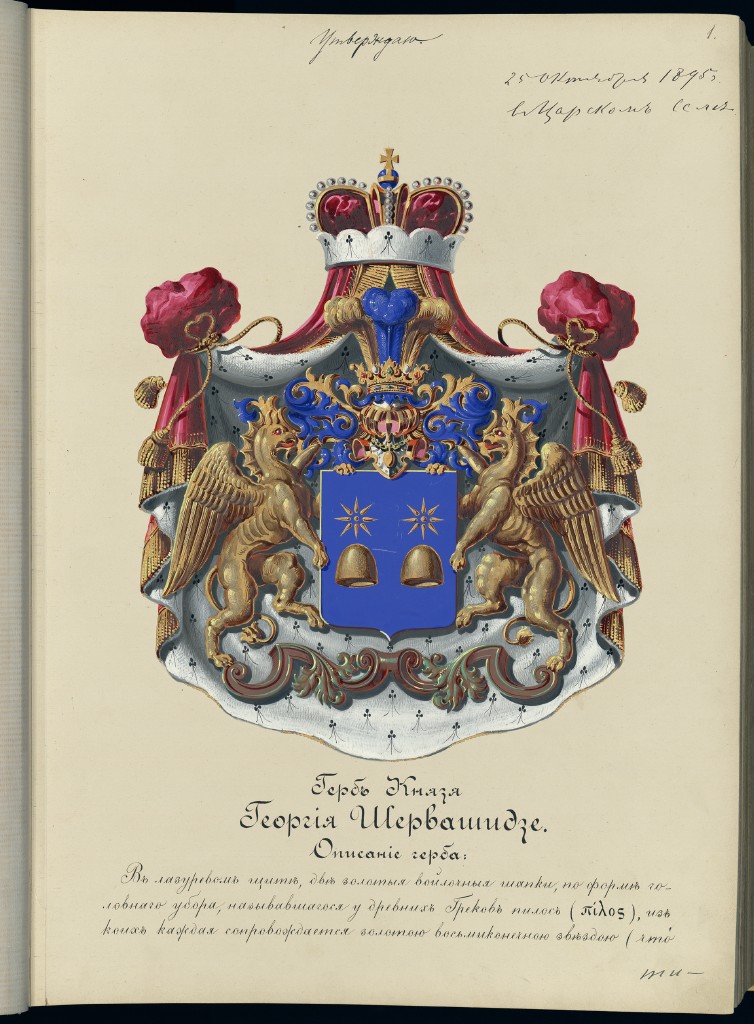
House of Shervashidze (Abkhazian: Чачба, Georgian: შარვაშიძე-შერვაშიძე) was a prominent noble family that ruled Abkhazia from the 12 centurye until the 19 century. Initially, the Shervashidze family governed Abkhazia since 1184 as a duchy within the Kingdom of Georgia. Following the kingdom’s fragmentation in the 15th century, Abkhazia emerged as an autonomous principality and Shervashidze claimed near-sovereign control over it. In the 16th century, Abkhazia fell under Ottoman influence. The most famous ruler from the dynasty was Kelesh Bey Shervashidze (c. 1747–1808) who ruled as a Muslim prince during a period of great turbulence. He is known for centralizing Abkhazia’s administration, fighting against rival Georgian principalities, and navigating between Ottoman and Russian interests. Assassinated by his son, Sefer Ali-Bey, allegedly with Russian support. In 1810, Prince Sefer Ali-Bey Shervashidze aligned with the Russian Empire, resulting in Abkhazia’s incorporation as an autonomous principality within Russia. The family’s rule effectively ended in 1864 when Abkhazia was fully annexed by Russia, and the principality was abolished. Their heraldic symbols were integrated into the Russian noble registry. Shervashidze family known also as Chachba, an Abkhazian local ethnolinguistic variant.
The Shervashidze family’s legacy is evident in various cultural and historical landmarks in Abkhazia. Their history reflects the complex interplay of local traditions and external influences that have shaped Abkhazia over the centuries. The Shervashidze family represent centuries of leadership in a region marked by imperial rivalries, religious shifts (Christianity to Islam and back), and a unique blend of Abkhazian and Georgian traditions. The Y-DNA haplogroup was determined by Big Y testing of the representatives of Shervashidze, Dziapsh-ipa, Emukhvari, Inal-ipa, Caabalırxwa families.
Some links:
https://en.wikipedia.org/wiki/House_of_Sharvashidze
https://gerbovnik.ru/arms/2613.html
https://gerbovnik.ru/og/v16/p0005.jpg
https://upload.wikimedia.org/wikipedia/commons/6/67/Coat_of_Arms_of_the_Sharvashidze.jpg
https://en.wikipedia.org/wiki/Principality_of_Abkhazia

House of Shamkhals

FamilyTreeDNA branch J-BY60698 / J-BY76016 (possible)
https://discover.familytreedna.com/groups/lak/tree?subgroups=336404,347967,361017
https://discover.familytreedna.com/y-dna/J-BY60698/classic
https://discover.familytreedna.com/y-dna/J-BY76016/classic
House of Shamkhals (Lak: Шамхалхъу, Kumyk: Шавхаллыкъ) was a prominent ruling dynasty in the region of present-day Dagestan, from the 8th to the 19th centuries. Their realm, known as the Shamkhalate, played a significant role in the political, cultural, and religious landscape of the Caucasus.
The title Shamkhal was emerged around 734 CE when the Arab Caliphate appointed rulers in the region of Kumukh (Lak: Гъумукъ), also known as Gazi-Kumukh, a cultural and political center of the Lak people. The Shamkhal dynasty were responsible for both administrative governance and the spread of Islam in the area. Over time, the Shamkhals established their authority. During the 15th century, the Shamkhalate expanded its territory and influence. While the Shamkhalate’s early history is intertwined with the Lak people, over time, the political center shifted to Tarki (Kumyk: Таргъу), a city predominantly associated with the Kumyk population. In turn, this resulted in the formation of a distinct lineage of Shamkhals in Tarki. Shamkhalate was dominated by the Turkic Kumyks, and the Lak people hold the honorable title of «Gazi» because of the earlier adoption of Islam. The Shamkhal dynasty’s heritage is a complex tapestry woven from Arab, Lak, and Kumyk, threads. In history, their origin is variously described as Arabic, Turkic, or local indigenous. Nowadays, their native origin is undeniably proven by current DNA research.
The dynasty’s strategic location allowed it to interact with major powers of the time, including the Ottoman Empire, Persia, and Russia. These interactions ranged from alliances to conflicts, as the Shamkhals navigated the complex political landscape of the Caucasus. The Shamkhals held the title of Vali of Dagestan, indicating their paramount status among regional rulers. The Shamkhal dynasty’s influence persisted until the 19th century, with the eventual annexation of their territories by the Russian Empire. Despite this, the legacy of the Shamkhals remains significant in the history of the Caucasus, reflecting a period of regional governance, cultural development, and interaction with major empires.
The Y-DNA haplogroup was determined by Big Y testing of various representatives of two main lineages of Shamkhal dynasty, Tarkovskiy and Gazi-Kumukh.
Some links:
https://en.wikipedia.org/wiki/Gazikumukh_Shamkhalate
https://en.wikipedia.org/wiki/Shamkhalate_of_Tarki
https://en.wikipedia.org/wiki/Laks_(Caucasus)
https://en.wikipedia.org/wiki/Kumyks
https://en.wikipedia.org/wiki/Kumukh